Performance Management in iO
Why Performance Management
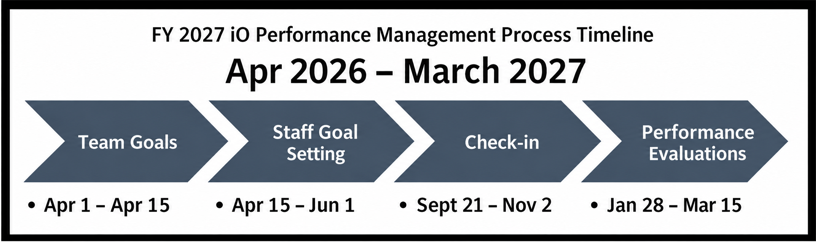
Performance management is a continuous cycle designed to ensure conversations are fair, meaningful, and grounded in real performance, growth, and impact. It connects daily work to organizational priorities, reinforces development, and ensures that no single moment defines performance. The cycle begins with setting clear goals, where individual objectives are aligned with team and organizational priorities, success is defined through clear and measurable outcomes, and expectations are established early to provide direction.
Throughout the year, the process is sustained through ongoing check-ins, including at least one formal conversation. These check-ins create space for regular dialogue between managers and employees to discuss progress, address challenges, and adjust priorities as conditions evolve. They also provide opportunities for timely feedback and support, helping ensure that performance stays aligned with expectations and that individuals continue to develop.
The cycle concludes with the annual performance evaluation, which reflects on performance across the full year rather than isolated moments. This stage recognizes contributions, growth, and overall impact while ensuring that evaluations are fair, balanced, and grounded in results. It also sets the direction for the next cycle, reinforcing the idea that performance management is not a single event, but an ongoing rhythm of clarity, conversation, and reflection.
Performance management is not an event, it’s a cycle of clarity, conversation, and reflection.
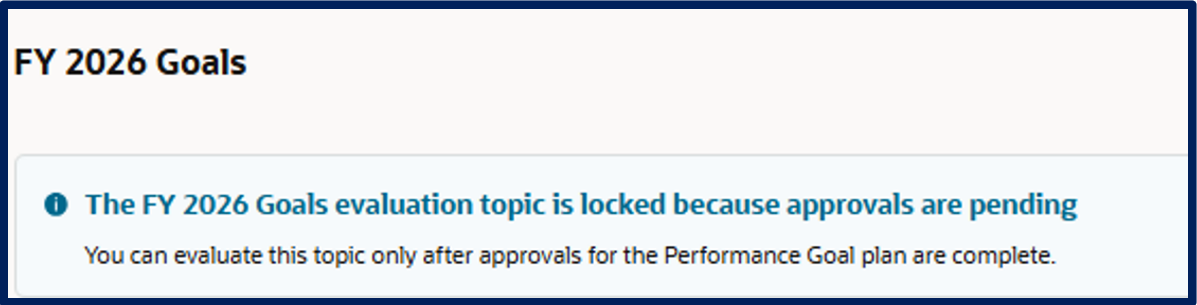
APR Locked Pending StatusIf your Annual Performance Review says "The FY 2026 Goals evaluation topic is locked because approvals are pending", you won't be able to continue until you resolve this. Click below to watch a 2-minute video on how to resolve the issue.  |
Annual Performance Review (APR) process in iO E-Learning (19-minutes)Training Video For Employees and Supervisors Click below to enroll in the E-Learning in iO
Quick How-To Complete the APR video |
Performance Evaluation Toolkit
The Performance Evaluation Toolkit is a curated collection of courses, AI simulators and books designed to support both supervisors and employees throughout the performance evaluation process.
Click below to visit the toolkit in iO.

- Preparing for Annual Performance Management
-
Annual Performance Management is an opportunity to reflect on performance over the past year, recognize contributions, and set a clear path forward. The goal of this process is to ensure performance conversations are fair, meaningful, and grounded in actual results, growth, and impact.
- The annual performance process is designed to:
- Assess progress toward established goals and expectations.
- Recognize accomplishments and contributions made throughout the year.
- Identify strengths, development areas, and growth opportunities.
- Align individual performance with departmental and university priorities.
- Establish clear goals and priorities for the year ahead.
- What to Consider When Preparing
-
Effective annual performance discussions are based on a full-year perspective, not isolated moments. Preparation should include:
- Reviewing goals set at the beginning of the year and noting outcomes or progress.
- Reflecting on key accomplishments, challenges, and lessons learned.
- Considering how work has supported team, department, and university objectives.
- Identifying skills or experiences that supported success or limited progress.
- Acknowledging changes in priorities, scope, or responsibilities during the year.
- Manager and Supervisor Responsibilities
-
Managers and supervisors are responsible for ensuring performance conversations are accurate, balanced, and constructive. This includes:
- Evaluating performance based on documented work, outcomes, and behaviors.
- Providing clear examples to support ratings and feedback.
- Recognizing achievements and contributions in a timely and thoughtful manner.
- Discussing development needs and future growth opportunities.
- Setting clear, achievable goals and expectations for the coming year.
- Employee Responsibilities
-
Employees play an active role in the performance management process. To prepare for annual reviews, employees should:
- Reflect on accomplishments, progress, and challenges over the year.
- Be prepared to discuss contributions, results, and areas for development.
- Seek clarification on expectations, feedback, and future priorities.
- Share career interests and development goals.
- Engage openly in the conversation and goal-setting process.
- Supporting Ongoing Performance Conversations
-
While the annual review is a formal milestone, it reflects performance across the year. Regular conversations between managers and employees help ensure that annual discussions are accurate, transparent, and aligned with actual performance and evolving priorities.
- Support and Resources
-
Office hours and resources are available to support managers and employees as they prepare for Annual Performance Management conversations. Teams may also request in-person support or guidance.
For assistance, please contact otd@rice.edu.
- Goal Setting Training and Office Hours
-
Office Hours for Goal Setting and General Performance Management Question
Got Questions? Our Performance Management team is available to assist. We have scheduled the office hours below, click on the Zoom Link to join the office hours at the scheduled times. Additionally, you can reach us at OTD@rice.edu (Office Hours will be updated on Fridays)
1 Apr 26 - 10:00 AM - 10:30 AM
6 Apr 26 - 3:00 PM - 3:30 PM
9 Apr 26 - 1:00 PM - 1:30 PM
13 Apr 26 - 3:00 PM - 3:30 PM
17 Apr 26 - 10:00 AM - 10:30 AM
- Key Steps in the Annual Performance Review (Evaluation)
-
Key Steps of the Process:
1. Self-Evaluation and Rating: You will assess your accomplishments, progress towards meeting goals, expectations, deliverables, and your overall performance.
2. Manager and Employee Evaluation Discussion: You and your manager will meet to review your performance, assess progress toward expectations, and discuss your goal accomplishment, key deliverables, and overall role responsibilities. Your active participation in these meaningful conversations is essential, as it provides valuable insight into your performance and accomplishments over the past year.
3. Manager Evaluation and Rating: Your manager will provide a final rating and feedback on your performance. These ratings will help inform merit-based decisions.
4. Employee Acknowledgement: You will submit any final comments and complete the acknowledgement to close the process. Please note, the cycle will not end if you do not complete the final acknowledgement.
- Executive Communication